
At Mililani High School in Hawaii, engineering education is creating opportunities for students to engage deeply with real-world challenges that require authentic engineering solutions. Under the guidance of AP Physics and Engineering Tech teacher Tyson Kikugawa, students are not only introduced to engineering concepts but are also supported in pursuing independent and meaningful work.
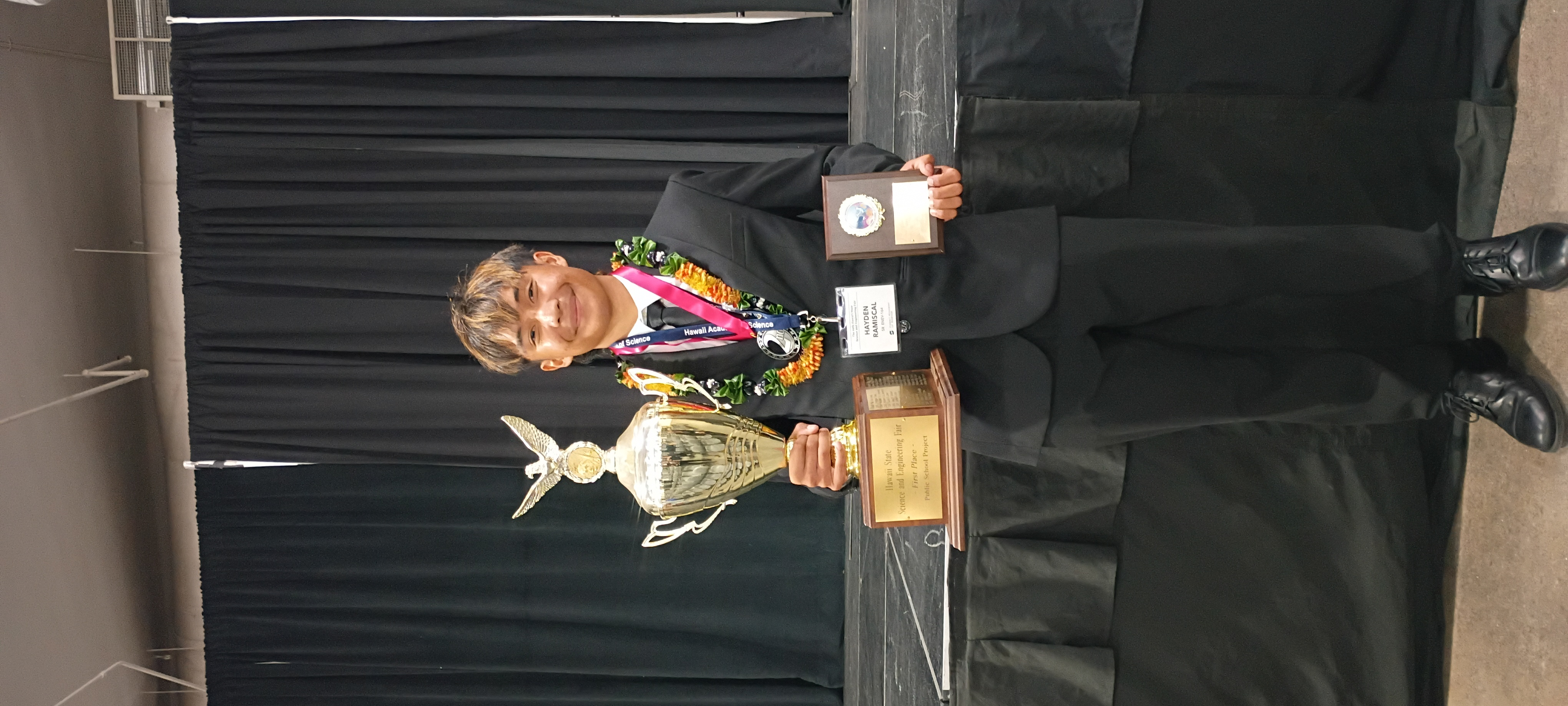
One such student, Hayden Ramiscal, recently earned 2nd place overall at the Hawaii State Science and Engineering Fair and was recognized as the top public school project in the state. His achievement reflects both sustained effort and a learning environment that encourages long-term exploration.
A Multi-Year Design Process
Hayden’s project did not emerge from a single assignment. Over three years, he developed and refined a focused line of inquiry centered on sustainable materials in 3D printing.
- In his sophomore year, he examined the structural properties of 3D-printed materials.
- As a junior, he designed a custom 3D printer using recycled plastic filament.
- As a senior, he advanced this work by developing a printer that uses algae-based materials.
His final project, Characterizing Sargassum polyphyllum for Use in Biodegradable 3D-Printing Supports, demonstrates a comprehensive engineering approach that includes material processing, mechanical testing, and environmental analysis. His research poster illustrates both the technical depth of the work and the iterative nature of his design process.
Engineering with Purpose
The focus of Hayden’s work was to explore biodegradable alternatives to traditional plastic supports used in additive manufacturing. His findings indicate the potential of natural materials, such as alginate, to reduce plastic waste while maintaining functional performance in 3D printing applications.
This project represents applied engineering grounded in environmental considerations. It also reflects a high level of independence, as the work was not completed for a specific course requirement.
The Role of e4usa
During his senior year, Hayden participated in a class that implemented the e4usa+FIRST curriculum, part of the broader Engineering for US All (e4usa) initiative. While his project was self-directed, the structure and philosophy of e4usa contributed to the environment in which this work could develop.
e4usa is a year-long high school course that introduces students to engineering through hands-on, project-based learning. The program is designed so that teachers from a range of backgrounds can implement engineering courses that emphasize design, problem-solving, and real-world application.
Students engage in:
- Open-ended design challenges
- Prototyping and testing
- Iterative problem solving
- Development of engineering portfolios
This approach supports sustained engagement and allows students to build on earlier foundational lessons to pursue complex ideas over time.
Supporting Student-Driven Work
Kikugawa’s approach to teaching demonstrates how engineering education can extend beyond structured assignments. Students are provided with the tools and flexibility to explore topics of personal interest while developing technical and analytical skills.
A key component of the e4usa framework is its emphasis on the engineering design process as a continuous and iterative practice. Students are encouraged to identify problems, test solutions, and refine their work based on evidence and feedback. As a result, the engineering design process becomes a way of thinking and cultivating engineering identity.
Hayden’s project exemplifies this progression, moving from foundational questions to a sophisticated application with real-world relevance.
Expanding Opportunities Through Engineering Education
Experiences like this highlight the broader impact of introducing engineering at the high school level and the potential for high school students to create authentic engineering solutions. At Mililani High School, this work is further supported through a partnership with the University of Hawaii at Manoa. Song Choi serves as a liaison, connecting classroom learning with university-level engineering perspectives and mentorship. In addition, the University of Hawaii at Manoa is an e4usa credit and placement partner, providing pathways for students to earn college credit based on their high school coursework. e4usa courses are designed to build problem-solving skills, connect learning to real-world contexts, and create pathways toward college and career opportunities, including access to college credit and industry-recognized credentials.
For many students, these courses provide an entry point into engineering that emphasizes creativity, relevance, and long-term skill development.
Mililani High School offers an example of how engineering education can support both structured learning and independent exploration. Through programs like e4usa, teachers are equipped to bring engineering into their classrooms in ways that are practical, impactful, and relevant to their school communities.